Rainy Day: A Sweet, Friendly Handwritten Font
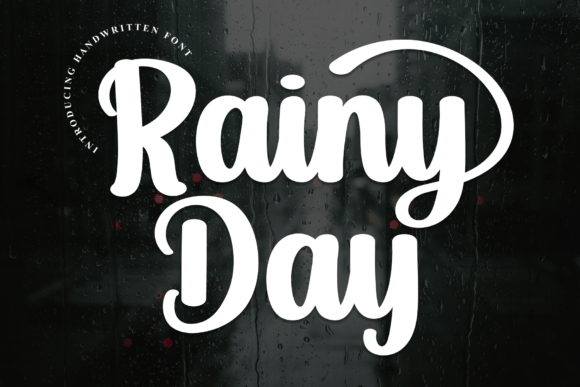
Imagine opening a design project and instantly feeling warmth—not from color or layout, but from the very shape of the letters. That’s what Rainy Day offers: a handwritten font that feels like a quiet conversation over coffee. It’s not overly ornate or rigidly formal. Instead, it’s soft, approachable, and full of subtle personality—each character drawn with gentle variation, slight slant, and natural flow.
What Makes Rainy Day Distinct?
Rainy Day is a carefully crafted handwritten typeface designed to mimic authentic pen-on-paper rhythm—not through randomness, but through intentional, human-like inconsistency. Letters connect smoothly where they should, pause naturally at word breaks, and retain a light, airy weight that never overwhelms. Unlike many script fonts that prioritize flourish over function, Rainy Day balances legibility with charm. It works equally well at 14pt in a newsletter header or 60pt on a hand-painted café sign.
It’s not a “one-size-fits-all” script. There are no forced ligatures or auto-replacing glyphs unless you choose them. This gives designers control without complexity—ideal for people who want expressive typography without wrestling with OpenType features.
For Beginners & Hobbyists
If you’re just starting with Canva, Google Slides, or basic Photoshop, Rainy Day lowers the barrier to creating something that feels personal and polished. You don’t need to know kerning pairs or baseline shifts—just type, adjust size, and go. Try it on a handmade birthday card, a printable weekly planner, or an Instagram story overlay. Its forgiving spacing and clear letterforms mean your first attempt won’t look amateurish.
For Educators & Content Creators
Teachers crafting worksheets, lesson slides, or classroom posters often need fonts that feel inviting—not cold or corporate. Rainy Day softens academic material without sacrificing clarity. A science worksheet titled “How Rain Forms” gains quiet empathy when set in Rainy Day. Bloggers writing about mindfulness, parenting, or creative wellness find its tone aligns effortlessly with their voice—no rewrites needed to match typography to message.
For Small Business Owners & Marketers
A local bakery doesn’t need a sleek sans-serif to signal quality—it needs warmth, trust, and memory. Rainy Day appears on jam jar labels, seasonal email headers, and Instagram bios not as decoration, but as part of the brand’s quiet confidence. It’s versatile enough for a farmers’ market flyer and refined enough for a limited-edition product launch. Importantly, it scales well across print and screen—no pixelation, no awkward spacing on mobile.
For Freelancers & Design Professionals
Experienced designers appreciate how Rainy Day behaves in real-world constraints. It pairs cleanly with neutral sans-serifs like Inter or Lato, avoids visual competition in layered layouts, and maintains readability even with low-contrast color combos (think charcoal gray on cream). When clients ask for “something friendly but not childish,” Rainy Day delivers nuance—not novelty. And because it’s well-hinted and web-optimized, it renders consistently across browsers and devices.
Practical Uses You Can Try Today
- Bloggers: Use Rainy Day for post titles or pull quotes—especially in lifestyle, food, education, or wellness niches. Its rhythm invites readers to slow down and engage.
- Educators: Apply it to student-facing handouts, rubrics, or digital bulletin boards. The gentle curves reduce visual fatigue during long reading tasks.
- Small retailers: Feature it on packaging tags, receipt footers, or loyalty program cards. It subtly reinforces care and craft—without saying a word.
- Hobbyists: Pair it with watercolor textures or linen backgrounds for printable art prints, greeting cards, or journal covers. Its organic flow complements tactile materials beautifully.
- Nonprofits: Leverage its sincerity in donor thank-you notes or community event flyers—where authenticity matters more than polish.
What to Consider Before You Choose
Not every project needs Rainy Day. If you’re designing a technical manual, a legal disclaimer, or a high-density data dashboard, its relaxed rhythm may hinder speed or precision. Likewise, if your brand voice leans into bold minimalism or futuristic energy, this font’s gentle nature might soften your message unintentionally.
Ask yourself:
- Is legibility at small sizes critical? Rainy Day shines above 16px. Below that, test carefully—especially for body text.
- Do you need multilingual support? It includes Latin-based languages (English, Spanish, French, German, etc.) but doesn’t cover Cyrillic, Greek, or Asian scripts.
- How much flexibility do you need? While it offers stylistic alternates (like swash capitals), it’s not a variable font. You’ll select one weight and style—not tweak width or contrast on the fly.
- Where will it live? It’s licensed for both personal and commercial use—including web embedding and app integration—but always verify the license terms match your specific deployment (e.g., SaaS platforms or physical merchandise).
When Rainy Day Fits—and When It Doesn’t
It fits best when your goal is connection over correction, warmth over wow-factor, and quiet confidence over loud distinction. A wedding invitation suite? Yes—especially for couples who value intimacy over extravagance. A fintech dashboard? Probably not. A children’s book interior? Thoughtfully—paired with ample whitespace and tested for dyslexia-friendly line spacing.
Its strength isn’t in dominance, but in harmony. It doesn’t shout “look at me”—it says “sit awhile.” That makes it unusually durable. A logo using Rainy Day today won’t feel dated in three years because it avoids trend-driven quirks. It leans on time-tested human qualities: sincerity, ease, and quiet intention.
A Final Thought for Your Next Project
You don’t need to overhaul your entire toolkit to benefit from Rainy Day. Start small: swap it in for one headline, one call-to-action button, or one social media graphic. Notice how it changes the emotional temperature—not just the visual one. Does it make the message feel more grounded? More generous with the reader’s attention? More like something made by hand, for humans?
If yes, then Rainy Day isn’t just another font. It’s a quiet collaborator—one that helps your work feel less like output, and more like offering.