Squisy: A Friendly Handwritten Font That Fits Real Projects
Imagine opening a wedding invitation and feeling an immediate sense of warmth—not because of the paper stock or layout, but because the words themselves seem to smile at you. That’s the quiet power of Squisy: a simple, friendly handwritten font with just enough whimsy to stand out without overwhelming. It’s not trying to be everything. It’s designed to be approachable, legible, and human—qualities that matter more than ever when your audience is scrolling fast, skimming headlines, or deciding whether to trust your brand in under three seconds.
Why “Friendly” Matters More Than You Think
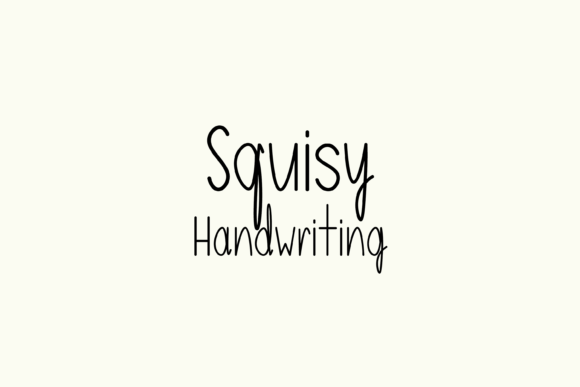
In digital and print design, tone is often carried by type. A stiff, overly formal font can unintentionally signal distance—even coldness. Squisy avoids that trap. Its gentle curves, uneven baseline, and subtle variation in stroke weight mimic natural handwriting without veering into illegibility or trend-chasing novelty. That makes it especially effective for creators who want authenticity without sacrificing clarity: educators crafting classroom posters, small business owners designing local event flyers, or bloggers adding personality to quote graphics.
Unlike some handwritten fonts that rely on excessive swashes or exaggerated flourishes, Squisy keeps its quirks grounded. There’s no forced drama—just a relaxed rhythm that invites attention rather than demanding it. That restraint is what lets it work across mediums: from a 12-point caption in a magazine spread to a bold headline on a café chalkboard sign.
Where Squisy Fits—and Where It Doesn’t
Squisy shines brightest where warmth, personality, and readability intersect. Consider these real-world uses:
- Wedding stationery: Couples choosing Squisy for their invitations often report guests commenting on how “inviting” and “thoughtful” the design feels—even before reading a word. Its softness complements floral motifs, linen textures, and minimalist layouts without competing.
- Small business branding: A neighborhood bakery, indie bookstore, or wellness studio might use Squisy for a logo lockup or menu header. It signals care and craft without sounding corporate—or childish.
- Educational materials: Teachers using Squisy in handouts or presentation slides find students respond more positively to instructions or quotes displayed in this font. It lowers perceived cognitive load—especially helpful for younger learners or neurodiverse audiences.
- Social media graphics: Short inspirational quotes or product highlights gain emotional resonance when set in Squisy. Its light contrast and open letterforms scale well on mobile screens, even at smaller sizes.
That said, Squisy isn’t built for every job. It’s not ideal for dense body text in long-form articles, legal disclaimers, or technical documentation—contexts where neutrality and high legibility at small sizes are non-negotiable. It also doesn’t replace serif or sans-serif workhorses like Georgia or Inter in multi-font systems unless paired intentionally (e.g., Squisy for headings + a clean sans-serif for paragraphs). Knowing that boundary helps you use it with purpose—not just because it’s charming.
Designing With Intention, Not Just Aesthetics
Choosing Squisy isn’t just about picking a “cute” font. It’s a deliberate communication decision. When you select it, you’re signaling values: approachability over authority, sincerity over polish, humanity over automation. That alignment matters—especially for solopreneurs, nonprofits, and mission-driven brands where voice and values are central to connection.
For example, a freelance therapist designing a workshop flyer might choose Squisy for the title “You Belong Here”—not only because it looks warm, but because its handwritten quality subtly echoes the personal, one-to-one nature of their work. Contrast that with a fintech startup launching a new dashboard; here, Squisy would likely undermine credibility. Context shapes meaning—and Squisy’s meaning is rooted in connection, not control.
Practical Tips for Getting the Most From Squisy
Start simple. Try pairing Squisy with a neutral, highly legible sans-serif (like Open Sans or Lato) for balance. Use it for short, high-impact elements: logos, pull quotes, call-to-action buttons, or section headers. Avoid stretching or condensing the font—it loses its organic feel when distorted.
When printing, test at actual size. Squisy’s lighter weight means it can fade on low-resolution printers or absorb into textured paper. If you’re ordering physical invitations or packaging, request a printed proof first. And if you’re using it digitally, check contrast ratios—especially against light pastels or photos. Its friendliness shouldn’t come at the cost of accessibility.
Also consider licensing. Squisy is typically available for personal and commercial use, but always verify permissions for your specific project—especially if distributing templates, selling digital products, or embedding in apps. A quick license check saves time later.
Who Benefits Most—and Why
Squisy resonates most strongly with professionals who prioritize emotional resonance alongside function: educators building inclusive classrooms, wedding designers curating meaningful experiences, marketers targeting empathetic audiences, and content creators aiming to stand out in saturated feeds. It’s also a thoughtful choice for hobbyists launching Etsy shops, bloggers refining their visual identity, or community organizers designing event posters that feel welcoming—not transactional.
What ties these users together isn’t just taste—it’s intent. They’re not looking for a decorative flourish. They’re solving for trust, clarity, and human connection. Squisy supports those goals by removing visual barriers between message and reader. It doesn’t shout. It leans in.
A Font That Grows With Your Work
One unexpected strength of Squisy is its adaptability over time. Because it avoids extreme trends—no exaggerated bounce, no forced ink blots, no heavy distressing—it ages gracefully. A logo designed with Squisy today won’t look dated in three years. A quote graphic shared in 2024 remains shareable in 2027. That longevity reduces the need for frequent rebranding or visual overhaul—saving time, budget, and creative energy.
It also pairs well with evolving tools. Whether you’re using Canva, Adobe Express, Figma, or even Google Docs, Squisy integrates smoothly. Its straightforward character set includes standard Latin glyphs, basic punctuation, and common accented characters—covering most English-language needs without requiring workarounds.
Ultimately, Squisy works because it respects both the designer’s time and the viewer’s attention. It delivers personality without complexity, charm without clutter, and clarity without compromise. In a world full of noise, sometimes the most powerful design choice is simply to be kind—to your audience, your message, and yourself.