Hello Georgina: A Handwritten Font That Fits Real Creative Workflows
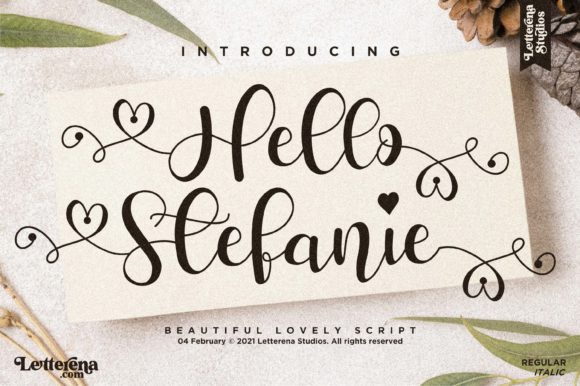
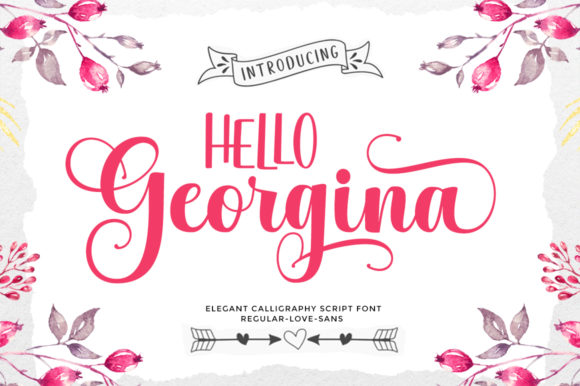
Hello Georgina isn’t just another script font—it’s a deliberate design choice for professionals who need warmth without sacrificing polish. As a duo font family combining a flowing, jolly script with a clean, neutral sans serif, it bridges the gap between personality and professionalism. Its varying baseline, smooth line weight transitions, and thoughtfully crafted alternates aren’t decorative flourishes—they’re functional assets that support clarity, hierarchy, and emotional resonance in real-world deliverables.
Where Hello Georgina Fits in Your Design Process
Most fonts enter a project at the *execution* stage—after layout, copy, and brand direction are locked. Hello Georgina works earlier. Because it carries strong tonal cues (friendly, sincere, approachable), it often helps *clarify intent* during planning. For example, a wedding stationery designer might test Hello Georgina alongside three other scripts during mood board development—not to finalize typography, but to gauge whether “joyful elegance” or “rustic charm” better matches the couple’s vision. The script’s natural rhythm and the sans serif’s grounded presence act as visual translators, making abstract concepts tangible before a single card is printed.
For small business owners building a brand identity, Hello Georgina can serve as an early alignment tool. Pairing its script for headlines or taglines with its companion sans for body text creates immediate contrast and cohesion—no extra font licenses, no compatibility headaches. That consistency reduces decision fatigue later, especially when scaling assets across business cards, email headers, and social banners.
Practical Integration Across Common Use Cases
Unlike fonts that demand heavy customization or plugin support, Hello Georgina is built for direct use in industry-standard tools: Adobe Creative Cloud (Illustrator, InDesign, Photoshop), Figma, Canva (via upload), and even modern web platforms using @font-face or variable font embedding. Its OpenType features—including contextual alternates, swashes, and stylistic sets—are accessible without coding, meaning designers and non-designers alike can activate polished variants with a few clicks.
- Wedding invitations: Use the script for names and dates, the sans for venue details and RSVP instructions. The baseline variation adds organic movement without compromising legibility at 14–16 pt sizes.
- Thank-you cards & greeting cards: Leverage alternate glyphs to avoid repetition—swap out “a”, “e”, or “g” forms across multiple cards in a batch to maintain handmade authenticity at scale.
- Logos & business branding: Combine both weights intentionally—script for the brand name, sans for the descriptor (“Hello Georgina • Typography Studio”). This reinforces duality: expressive yet reliable.
- Digital content: On websites or newsletters, apply Hello Georgina sparingly—for hero headings or pull quotes only. Its personality shines most when contrasted against highly readable system fonts like Inter or Roboto for body text.
Workflow Considerations Before You Install
Compatibility starts with file format. Hello Georgina ships in OTF and WOFF2 formats—ensuring broad desktop and web use—but verify your platform supports OpenType features if you plan to use alternates or ligatures. In Figma, for instance, stylistic sets appear under the “Typography” panel; in Illustrator, they’re in the OpenType menu. No plugins required—but knowing where to look saves time.
Preparation also means managing expectations. While Hello Georgina feels handwritten, it’s not a calligraphy simulator. It doesn’t include pressure-sensitive strokes or randomized letterforms. That’s intentional: its consistency supports brand control. If your workflow relies on rapid iteration—say, generating 50+ social graphics per week—the predictability of its glyph set means less manual tweaking and fewer revisions.
For educators or content creators building downloadable resources (e.g., printable planners or quote kits), licensing matters. Hello Georgina typically includes commercial use rights, but always confirm permissions for redistribution—especially if end users will edit or repackage the font within their own templates.
Maintaining Quality and Consistency Over Time
Long-term usability hinges on how well Hello Georgina adapts as your work evolves. Its dual nature makes it unusually durable: the script retains character in intimate contexts (handwritten-style notes, personal branding), while the sans serif scales cleanly into formal settings (presentations, reports, signage). That flexibility reduces the need to swap fonts mid-project or rebuild assets when repurposing content.
To preserve quality across outputs, establish simple usage rules early. For example:
- Never stretch or skew the script—it disrupts its natural flow and baseline variation.
- Always pair the script with its matching sans serif—not a generic alternative—to retain optical harmony.
- Use alternates purposefully: reserve swashes for initial letters or standalone words, not full paragraphs.
These aren’t arbitrary restrictions—they’re guardrails that protect the font’s core strengths. When applied consistently, they turn subjective choices (e.g., “Which ‘g’ looks friendlier?”) into repeatable decisions aligned with your voice and audience.
Real-World Implementation Tips
If you’re integrating Hello Georgina into an existing toolkit, start small. Replace one recurring asset—like your email signature or Instagram story template—with the duo font. Observe how recipients respond. Does the tone feel more inviting? Does readability hold up on mobile? That feedback loop informs broader adoption.
For teams, share a lightweight style guide snippet: a PDF or Notion page showing approved pairings, size ranges, and examples of correct vs. overused alternates. This avoids drift—especially when contractors or junior designers contribute—and keeps output cohesive without micromanagement.
And if you’re evaluating Hello Georgina against similar fonts (e.g., Brittany Script or Sofia Pro), compare not just aesthetics but workflow fit. Does it install cleanly across your team’s OS versions? Does its character set cover your language needs (e.g., accented characters for Spanish or French clients)? Does it render crisply at small sizes on print proofs? These practical checks matter more than visual novelty alone.
Final Thought: Tools Serve Intent, Not the Other Way Around
Hello Georgina succeeds because it assumes you have real work to do—not just pretty layouts to make. Its design respects constraints: time, technical limits, audience expectations, and brand continuity. You don’t need to “learn” it to use it well. You just need to know when warmth adds value (a heartfelt thank-you), when clarity must lead (contact details), and how to let both coexist without compromise. That balance—between feeling and function—is where Hello Georgina earns its place in your process, not as decoration, but as infrastructure.