Cloudity: A Whimsical Handwritten Font for Light, Dreamy Design
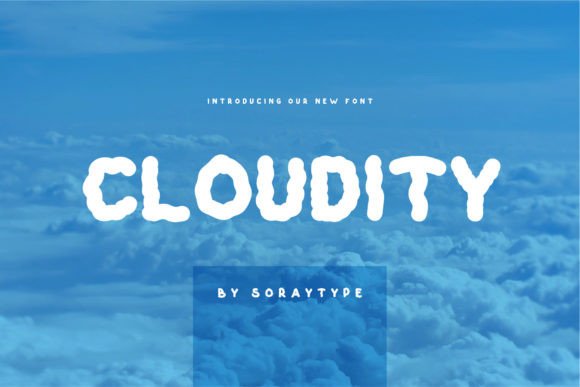
Cloudity is a handwritten display font designed to evoke the softness and buoyancy of clouds. Its letters feature irregular baselines, gentle curves, open counters, and subtle variations in stroke weight—traits that mimic natural handwriting rather than mechanical precision. Unlike monoline or highly structured scripts, Cloudity prioritizes airiness and rhythm over uniformity. It is not intended for body text or extended reading; instead, it serves as a stylistic accent for short, evocative phrases.
Why Consider Cloudity?
Designers often seek fonts that reinforce mood and intention—not just legibility. Cloudity appeals to those aiming for a specific emotional tone: light, gentle, imaginative, or nostalgic. Its visual character supports concepts tied to childhood wonder, mindfulness, nature, or slow living. You might consider Cloudity if your project calls for:
- A distinctive yet approachable brand voice for lifestyle, wellness, or creative education brands;
- Invitations, greeting cards, or packaging where warmth and personality matter more than formality;
- Editorial features or social media graphics emphasizing calm, playfulness, or daydreaming;
- Illustration-based layouts where typography functions as part of the artwork, not just information.
Practical Benefits and Realistic Tradeoffs
One benefit of Cloudity is its strong visual identity. In contexts with minimal copy—such as logos, headlines, or product tags—it communicates tone efficiently. Its irregular spacing and organic flow can help designs avoid the sterility sometimes associated with digital typography. Because it’s hand-drawn (not algorithmically generated), it carries subtle human variation that resonates with audiences seeking authenticity.
However, these same qualities introduce constraints. Cloudity has limited language support—typically covering Latin-based alphabets without extensive diacritical marks. It lacks small caps, true italics, or multiple weights, so pairing it with a robust sans serif or serif companion font is essential for hierarchy and functionality. Also, its low contrast and open shapes reduce legibility at small sizes or on low-resolution screens. Using Cloudity below 24pt—or in dense UI elements like navigation menus—is generally inadvisable.
Another consideration is licensing. Like many independent typefaces, Cloudity is typically sold under desktop, web, or app-specific licenses. Users must verify usage rights before deploying it across platforms—especially in SaaS products or client work where redistribution may be involved.
When Cloudity Fits Well
Cloudity excels in controlled, intentional applications. For example, a yoga studio launching a seasonal workshop series might use Cloudity for the title “Breathe & Drift” on a printed poster, paired with a neutral sans serif for date, time, and location. The font reinforces the theme without competing with practical information.
Similarly, an indie stationery brand could apply Cloudity to hand-lettered product names—“Cloud Notes,” “Puff Journal”—where the name and typeface align conceptually. In such cases, the font contributes meaningfully to brand recognition and emotional resonance.
It also works well in motion graphics or animated interfaces where its flowing forms translate naturally to subtle transitions—like letters appearing as if drawn by hand or floating gently into place.
When to Look Elsewhere
Cloudity is less suitable when clarity, scalability, or linguistic breadth are priorities. If your project requires multilingual support—including extended Cyrillic, Greek, or Vietnamese characters—Cloudity won’t meet that need. Likewise, if you’re designing a responsive website with dynamic content, relying on Cloudity for headings risks inconsistent rendering across devices or browsers, especially where font fallbacks lack comparable rhythm.
Projects demanding typographic versatility—such as corporate identity systems requiring bold, regular, light, and condensed variants—will find Cloudity too narrow in scope. In those cases, more comprehensive script families (e.g., Quicksand, Playlist Script, or Billy Ohio) may offer better balance between personality and utility.
Finally, if your audience includes readers with visual impairments or cognitive differences, prioritize fonts with higher contrast, consistent letterforms, and tested accessibility metrics. While Cloudity isn’t inherently inaccessible, its design choices—low stroke contrast, variable x-heights, and loose spacing—can hinder readability for some users.
Making an Informed Choice
Evaluating Cloudity begins with defining your core need: Is the goal expressive emphasis—or functional flexibility? If the answer is the former, Cloudity deserves close attention. But if your use case involves frequent reuse, technical constraints, or diverse user needs, weigh how much of your workflow depends on this single stylistic choice.
Before licensing, test Cloudity in context. Render sample text at actual sizes and backgrounds you’ll use. Check contrast ratios against WCAG guidelines if accessibility is relevant. Import it into your design tool and assess how it pairs with supporting typefaces—does the combination create clear visual hierarchy, or does it blur distinctions between headline and subhead?
Also consider longevity. Trend-driven fonts can feel dated quickly. Cloudity’s cloud motif is timeless in concept but may read as overly thematic if overused. Ask whether its whimsy supports your message consistently—or distracts from it over time.
Lastly, compare alternatives not just by appearance, but by scope. Does another handwritten font offer broader language coverage, variable fonts, or better hinting for screen use? Even small differences in spacing metrics or OpenType features can affect production efficiency—especially in automated design systems or templated workflows.
Final Thoughts
Cloudity is a purpose-built tool—not a universal solution. Its value lies in specificity: when lightness, softness, and gentle movement are central to your communication goals, it offers a cohesive, memorable option. But its strengths are matched by clear boundaries. Understanding those boundaries helps avoid misalignment between intent and execution.
For designers evaluating typefaces, Cloudity invites reflection on what tone truly serves the audience—not just what looks appealing in isolation. That kind of intentionality, more than any single font choice, leads to effective, respectful, and enduring design.