Suntay: A Bold Handwritten Font for Confident Design
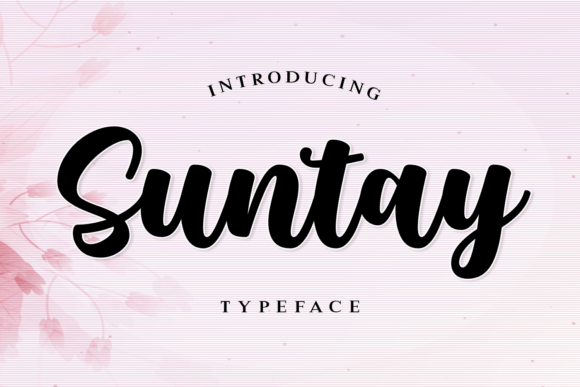
Suntay is a bold handwritten typeface designed with strong, deliberate strokes and an authentic, human-made quality. It avoids the overly polished or mechanical appearance of many digital fonts, instead offering a confident, approachable presence on the page or screen. Unlike script fonts that prioritize ornate flourishes or delicate connections, Suntay emphasizes clarity and impact—making it legible at moderate sizes while retaining expressive character.
People often seek Suntay when they need typography that conveys personality without sacrificing readability. This includes designers creating event invitations, small business owners developing brand collateral, educators preparing classroom materials, or marketers designing social media graphics. Its appeal lies not in novelty alone, but in how it bridges informality and authority—a rare balance in display typefaces.
Why Consider Suntay?
Several practical factors make Suntay worth evaluating alongside other handwritten options:
- Legibility at scale: Suntay’s generous x-height and open letterforms support readability in headings, posters, and digital banners—even at smaller display sizes (e.g., 36–48pt).
- Distinctive voice: Its consistent stroke weight and minimal contrast between thick and thin lines give it visual confidence. That helps text stand out in crowded layouts without relying on color or layout tricks.
- Design flexibility: While rooted in handwriting, Suntay avoids excessive swashes or ligatures. That makes it easier to pair with neutral sans-serif or slab-serif companions for body text.
- Authentic texture: Subtle irregularities in line endings and slight variations in curve tension reinforce its hand-drawn origin—adding warmth without compromising professionalism.
What to Expect—and What to Watch For
Suntay performs best as a display font. It is not intended for long-form body copy, captions, or interfaces requiring high-density information. Its strength lies in short, impactful phrases: headlines, logos, callouts, and titles. Users should expect solid performance in print and high-resolution digital contexts—but test carefully in low-DPI environments (e.g., older projectors or basic mobile screens), where fine details may soften.
A key consideration is licensing. Suntay is typically distributed under commercial licenses that permit use across web, desktop, and app projects—but permissions vary by vendor. Always verify usage rights before embedding in websites or distributing branded assets. Some versions include only uppercase letters or limited punctuation; check the character set if your project requires accented characters, numerals, or multilingual support.
Also note: Suntay’s boldness works well in isolation but can dominate a composition. When layered over complex imagery or textured backgrounds, ensure sufficient contrast and spacing. Kerning adjustments may be needed for specific word combinations, especially where tall ascenders (like “b” or “h”) sit beside wide characters (like “m” or “w”). Most design applications allow manual kerning, and some Suntay variants include OpenType features for improved spacing.
When Suntay Fits Well
Suntay is a strong candidate in scenarios where tone and recognition matter more than typographic neutrality. For example:
- Event branding: Wedding invitations, conference signage, or festival posters benefit from Suntay’s friendly yet assured presence—communicating celebration without seeming childish or overly casual.
- Small business identity: Cafés, boutiques, studios, or wellness practices often use Suntay in logos or shop signage to reflect hands-on service and individuality.
- Educational materials: Teachers and course designers sometimes choose Suntay for slide headers or handout titles to add approachability—especially in early education or community-based learning contexts.
- Social media visuals: Its bold silhouette holds up well in thumbnail-sized graphics, making it useful for Instagram quote cards, Pinterest pins, or LinkedIn cover images.
When to Explore Alternatives
Suntay may be less suitable in situations demanding strict formality, technical precision, or broad accessibility. Consider alternatives if:
- Your audience includes readers with dyslexia or low vision: While Suntay is more legible than many decorative scripts, its connected forms and uniform stroke weight reduce letter distinction compared to dyslexia-friendly fonts like OpenDyslexic or specialized sans-serifs such as Inter or Roboto.
- You need extensive language support: Suntay’s standard releases often cover Latin-based scripts only. Projects requiring Cyrillic, Greek, Arabic, or extended diacritics may require custom extensions—or a different family altogether.
- Your design system prioritizes modularity: If your brand guidelines rely on tightly coordinated font families (e.g., matching serif/sans/handwritten weights and widths), Suntay’s standalone nature may complicate hierarchy. In those cases, font families with built-in handwritten companions (e.g., Montserrat + Montserrat Alternates) offer tighter integration.
- You’re working under tight technical constraints: Suntay files tend to be larger than minimalist sans-serifs. On bandwidth-sensitive platforms (e.g., email clients or embedded kiosks), loading time and rendering consistency may favor lighter, more widely supported options.
Making a Practical Decision
To determine whether Suntay aligns with your needs, start with a functional test—not just aesthetic preference. Ask yourself:
- What is the primary role of this text? (e.g., “Is it a headline meant to grab attention—or a label that must be scanned quickly?”)
- At what size and medium will it appear most often? (e.g., “Will it be printed at 12pt on a business card—or displayed at 96pt on a trade show banner?”)
- How much control do you have over background, color, and spacing? (e.g., “Can you guarantee white space around the type, or will it sit over photos or gradients?”)
- What are your technical and legal requirements? (e.g., “Do you need web font hosting, variable font support, or multi-user licensing?”)
If Suntay meets those functional criteria, then assess its tonal fit. Does its confident, warm character reinforce your message—or distract from it? Try pairing it with your existing body font and reviewing real content—not just “The quick brown fox…”—to see how it behaves with your actual words, names, and numbers.
Finally, compare it directly against two or three alternatives in the same context. Don’t just look at samples—export mockups, view them on target devices, and ask colleagues or stakeholders to read them aloud. Legibility and resonance are best judged in use, not isolation.
Suntay offers a distinct voice among handwritten fonts—not the flashiest, not the most versatile, but reliably bold and human. Its value emerges not from universal applicability, but from thoughtful alignment with specific communication goals. When chosen intentionally, it supports clarity, character, and connection—without asking the reader to work harder to understand.