Beautiful Feelings: The Handwritten Font That Brings Warmth to Real Projects
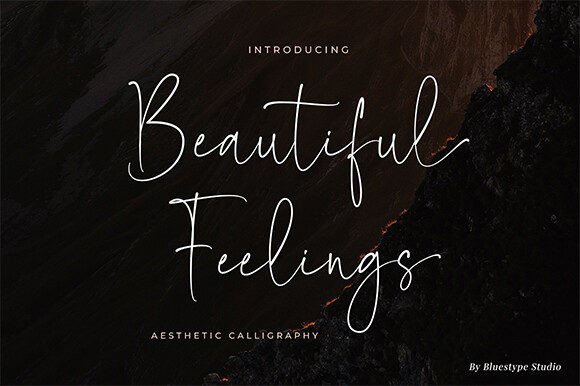
If you’ve ever stared at a blank invitation, a flat logo mockup, or a social media post that just *feels* cold—like it’s missing personality or heart—you’re not overthinking it. You’re sensing what typography can quietly convey. Beautiful Feelings is a charming handwritten font designed for exactly those moments: when warmth, sincerity, and gentle romance matter more than sharp edges or rigid symmetry.
It’s not a digital facsimile of handwriting—it’s hand-drawn, with subtle variations in line weight, organic curves, and slight imperfections that echo real pen-on-paper movement. That authenticity is why designers, small business owners, educators, and even wedding planners reach for Beautiful Feelings when they want their work to feel human first, polished second.
Where It Fits Naturally—Not Just “Because It’s Pretty”
This font doesn’t shout. It leans in. And because of that, it works best where emotional resonance matters more than loud branding or technical precision.
Consider a local florist launching a new seasonal collection. Their Instagram posts feature soft-focus photos of peonies and dried lavender—but the overlay text feels generic. Swapping their standard sans-serif for Beautiful Feelings instantly shifts the tone: the caption “Spring Arrives Gently” gains breath, rhythm, and intimacy. Followers don’t just read it—they pause. That pause is the difference between scrolling past and saving the post.
Or picture a freelance educator creating printable reflection journals for middle school students. She wants pages to feel safe and inviting—not clinical or overwhelming. Using Beautiful Feelings for section headers like “What Made You Smile Today?” or “One Thing I’m Proud Of” softens the ask. It signals care, not compliance. Students respond more openly—not because the font teaches empathy, but because it *models* it visually.
Real Use Cases Across Different Roles
Here’s how people actually use Beautiful Feelings, not in theory—but in practice:
- Wedding professionals: It’s common on save-the-dates and ceremony programs—but less obvious (and more effective) on vendor thank-you notes or rehearsal dinner menus. A handwritten “With all our love” in Beautiful Feelings feels personal, not templated.
- Small business owners: A boutique skincare brand uses it sparingly—for ingredient callouts on product labels (“Cold-Pressed Rosehip Oil”) or on reusable cloth tags sewn into packaging. It adds tactile warmth without sacrificing legibility at small sizes.
- Photographers: Not for watermarks slapped across every image—but selectively, on fine-art print signatures or limited-edition gallery cards. It avoids looking like a copyright stamp and instead reads like an artist’s quiet signature.
- Bloggers & content creators: They use it in Canva templates for quote graphics—especially for reflective, poetic, or mindfulness-focused posts. One yoga instructor told us she only uses Beautiful Feelings for quotes about presence or breath—never for schedules or class times. The contrast makes the meaningful words land deeper.
- Nonprofits & educators: A literacy nonprofit added Beautiful Feelings to their student-read-aloud posters (“Listen With Your Heart”). Teachers reported kids pointing to the words and tracing them with their fingers—something they didn’t do with block fonts. The shape invites interaction.
When It Might Not Be the Right Choice
Like any tool, Beautiful Feelings has limits—and knowing when *not* to use it is just as important as knowing when to reach for it.
It’s not ideal for body text in long-form documents. Its flowing nature slows reading speed, especially on screens. If you’re designing a multi-page workshop handout or a legal disclaimer page, stick with something clear and neutral.
It also doesn’t scale well in very tight spaces—think tiny app buttons or mobile navigation bars. At under 14px, letterforms begin to blur together. And while it pairs beautifully with clean sans-serifs (like Inter or Lato), it clashes with other decorative or overly ornate fonts. Less is more here.
Also worth noting: Beautiful Feelings is a script font, so it lacks full language support for non-Latin scripts. If your project serves multilingual audiences—including Arabic, Devanagari, or Vietnamese diacritics—check coverage before committing to it for headlines or key messaging.
How to Use It Thoughtfully (Not Just Decoratively)
Using Beautiful Feelings well isn’t about applying it everywhere—it’s about intentionality. Ask yourself: What feeling do I want this piece to carry? Who is receiving it—and what might they need from it right now?
A coffee shop owner used it for their “Hand-Poured Since 2018” wall decal—not their menu board. Why? Because the decal lives behind the counter, where customers linger and absorb atmosphere. The menu needs clarity, not charm.
A therapist redesigned her intake form header—switching from Helvetica Bold to Beautiful Feelings for the title “Welcome to Your First Session.” Nothing else changed. But clients consistently remarked, unprompted, that the form felt “kinder” or “less intimidating.” The font didn’t alter the questions—but it softened the threshold into vulnerability.
That’s the quiet power of Beautiful Feelings: it doesn’t replace good writing or thoughtful design. It deepens both. It turns functional text into something that resonates before it’s even read.
Getting Started—Practical Next Steps
If you’re curious, start small. Download a trial version (many foundries offer one) and open a simple design tool—Canva, Figma, or even Google Slides. Try it on one real item you’ll use soon: a quote graphic for your next newsletter, a signature line on a PDF invoice, or the title of a personal project you’re sharing with friends.
Pay attention to spacing. Script fonts live or die by letter spacing—Beautiful Feelings benefits from slightly looser tracking than default settings. Don’t be afraid to adjust it manually. Also, test it across devices. What looks romantic on your desktop may feel cramped on a phone screen—so preview before finalizing.
And if you’re buying it for commercial use—double-check the license. Some versions include web embedding rights; others are desktop-only. If you plan to use it in email campaigns or on a Shopify store banner, make sure the license covers that. It’s a small detail that saves time (and potential headaches) later.
In the end, Beautiful Feelings isn’t about chasing trends. It’s about choosing a voice—quiet, sincere, and handmade—that matches the intention behind your work. Whether you’re sealing an envelope, launching a brand, or simply writing a note to someone who needs to feel seen, this font helps you say it with grace.