Crystals: A Sweet, Friendly Handwritten Font
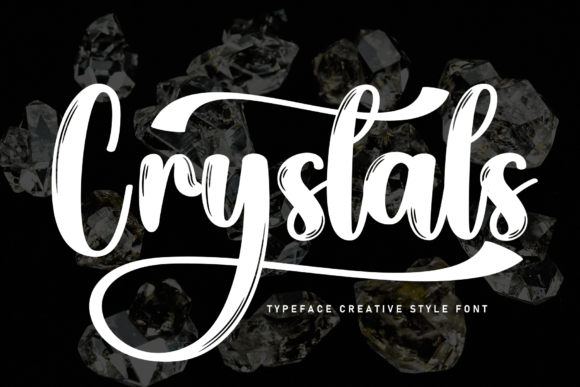
Crystals isn’t just another script font—it’s a thoughtful, approachable voice on the page. With its gentle curves, subtle irregularities, and warm, human rhythm, Crystals feels like a note passed between friends: sincere, unhurried, and quietly confident. It’s not overly ornate or rigidly formal. Instead, it balances natural flow with legibility—making it unusually versatile for both expressive design and functional communication.
Why Crystals Stands Out Among Handwritten Fonts
Many handwritten fonts fall into one of two traps: they’re either too stiff (mimicking calligraphy without breath) or too chaotic (losing clarity at small sizes or in dense layouts). Crystals avoids both. Its letterforms have consistent spacing, generous x-height, and carefully considered contrast—so it remains readable in body text at 14–16pt, yet still shines at display sizes.
What makes it especially useful is its authentic friendliness. The lowercase “a”, “g”, and “y” carry soft, open shapes—not exaggerated, not trendy, but genuinely inviting. Uppercase letters retain personality without shouting. And the optional ligatures and alternate characters (like the swash “Q” or looping “f”) let you add nuance—not decoration for its own sake, but intentional expression where it matters most.
Creative Applications That Feel Human, Not Generic
Crystals works best when it supports meaning—not distracts from it. Here are real-world uses grounded in audience needs:
- Small business branding: A local bakery might use Crystals for its menu headers and packaging tags—not as a full identity system, but as a tactile, warm accent next to a clean sans-serif body font. It signals care, craft, and approachability without leaning into clichéd “rustic” tropes.
- Educational materials: Teachers and course creators use Crystals for worksheet titles, learning objectives, or encouragement notes (“You’ve got this!”). Its readability at smaller sizes helps learners focus on content—not decoding letterforms.
- Digital newsletters and blogs: When used sparingly—for pull quotes, section dividers, or signature sign-offs—Crystals adds warmth to otherwise neutral layouts. It subtly reinforces tone: kind, grounded, and attentive.
- Print-on-demand products: Journal covers, greeting cards, and art prints benefit from Crystals’ balance of charm and restraint. Unlike ultra-decorative scripts, it scales cleanly across formats—from phone screens to 12×12 inch posters.
How Different Creators Can Adapt Crystals Thoughtfully
Designers often reach for Crystals when clients need to soften corporate messaging—say, for a wellness brand shifting from clinical to compassionate language. Pair it with a neutral typeface like Inter or Lato, and use Crystals only for human-centered copy: testimonials, value statements, or care instructions. Avoid overusing it in navigation or data tables; its strength is emotional resonance, not utility.
Bloggers and educators can apply Crystals to reinforce voice. If your writing style is conversational and reflective, a Crystals headline followed by clear, well-spaced body text creates visual harmony. Try it for recurring elements—like “Key Takeaway” boxes or weekly reflection prompts—to build gentle, recognizable rhythm across posts.
Freelancers and marketers find Crystals effective in client-facing assets where trust and clarity matter: proposal cover pages, onboarding emails, or workshop handouts. It signals professionalism *with* empathy—especially helpful when explaining complex services or pricing structures. Just ensure line spacing stays open (1.5x or more) and avoid justified alignment, which disrupts its natural flow.
Keeping Your Use of Crystals Clear and Audience-Focused
Handwritten fonts carry expectation—and risk. Crystals invites closeness, so misuse can feel disingenuous. To keep results authentic and effective:
- Respect hierarchy: Use Crystals for primary emphasis only—headlines, short quotes, logos, or signatures. Let supporting text do the heavy lifting in a highly legible, neutral typeface.
- Test at real sizes: Preview Crystals in context—not just as a standalone sample. Does it hold up in a mobile email preview? Is it still friendly at 18px on a muted background? Adjust tracking slightly (+10–20) if letters feel cramped.
- Stay consistent with tone: If your brand voice is direct and efficient, Crystals may clash unless balanced carefully. It thrives alongside calm, inclusive, or nurturing messaging—not urgency-driven or highly technical content.
- Limit color contrast: Avoid pairing Crystals with harsh black-on-white combos in long blocks. Soft charcoal (#333333) on off-white or warm cream backgrounds preserves its gentle character while maintaining accessibility.
Simple Ways to Extend Crystals Without Overcomplicating
You don’t need advanced design skills to make Crystals work harder for you. Try these low-effort, high-impact tweaks:
- Add a single underline beneath Crystals headlines using a thin, warm-toned stroke (e.g., #D9A78C)—not a default browser line. It echoes handwriting without adding clutter.
- Use Crystals for numbered lists in presentations or workbooks—but keep numbers in a clean sans-serif and apply Crystals only to the descriptive text beside them.
- In Canva or Figma, layer Crystals text over a faint watercolor texture (at 5–10% opacity). The effect feels handmade, not gimmicky—because the font itself already carries that quality.
- For social media graphics, pair Crystals with ample whitespace and one supporting photo—no busy backgrounds. Let the font breathe, and let the message land.
Crystals doesn’t ask you to reinvent your process. It asks you to notice where warmth matters—and to choose intention over ornament. Whether you’re designing a class syllabus, launching a new service, or simply sending a meaningful note to a colleague, Crystals offers a quiet, reliable way to say: This matters. You matter. Its usefulness lies not in how many things it can do—but in how well it does the few things that truly connect.