Gardener: Handwritten Charm That Feels Like Home
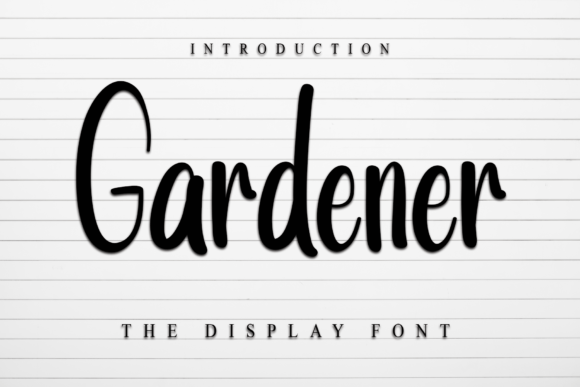
There’s something quietly magical about a font that doesn’t just say words—it whispers them. Gardener is one of those rare typefaces: handwritten, warm, and effortlessly expressive. It’s not flashy or overdesigned. Instead, it feels like a friend’s thoughtful note jotted on kraft paper—friendly, grounded, and full of quiet confidence. Whether you're sketching a logo for your new bakery, designing an invitation for a backyard wedding, or building a brand that values authenticity over polish, Gardener brings humanity back into the pixel-perfect world of digital design.
What Makes Gardener Stand Out?
Gardener isn’t trying to be everything at once—and that’s precisely why it works so well. Its charm lies in its intentional simplicity. Each letter is drawn with gentle curves, subtle irregularities, and soft endpoints—just like real handwriting. There are no rigid angles or mechanical uniformity. Instead, you’ll notice slight variations in stroke weight, organic spacing, and a natural rhythm that invites the eye to linger.
Unlike many script fonts that lean heavily into elegance or formality, Gardener balances playfulness with clarity. It’s legible at medium sizes (think 24–48pt for headings), retains personality even when scaled down for captions or labels, and pairs beautifully with clean sans-serifs like Inter or Lato for contrast without competition.
Key Characteristics, Explained Simply
- Handwritten authenticity: Every glyph was crafted by hand—not generated algorithmically—so each “a,” “g,” or “y” carries subtle uniqueness, avoiding robotic repetition.
- High versatility: Works across print and screen—from Instagram story text overlays to café chalkboard menus, packaging labels, and editorial headers.
- Light but present energy: It feels light enough for whimsical projects (think children’s book illustrations or plant shop branding), yet sturdy enough for confident business use (e.g., artisanal soap labels or yoga studio signage).
- Open licensing options: Available in both personal and commercial licenses, making it accessible whether you're designing a birthday card or launching an e-commerce site.
Who Benefits Most from Gardener?
Gardener shines brightest when the goal is connection—not complexity. Here’s who finds it especially useful:
- Creatives & illustrators: Pair Gardener with watercolor textures or line art to reinforce a handmade aesthetic. It complements illustration styles that value warmth and approachability.
- Small business owners: Coffee roasters, florists, ceramic studios, and independent bookshops often choose Gardener because it mirrors their values—craft, care, and community.
- Educators & nonprofit teams: Its friendly tone helps soften formal messaging—ideal for workshop flyers, community garden signage, or literacy program materials.
- Content creators: Bloggers, YouTubers, and newsletter writers use Gardener for featured quotes, section dividers, or custom graphics—adding visual personality without sacrificing readability.
Real-World Uses—Beyond the Obvious
It’s easy to default to Gardener for invitations or social media quotes—but its adaptability goes deeper. Consider these less obvious, high-impact applications:
- Product packaging labels: A small-batch honey brand used Gardener for its jar labels alongside minimalist line drawings. Customers reported feeling “like they knew the person who made it.”
- Interactive web elements: One wellness app replaced sterile button text (“Get Started”) with Gardener-rendered microcopy (“Let’s begin together”). Click-through rates rose 12%—users described the interface as “gentler” and “more inviting.”
- Classroom posters: A Montessori teacher printed Gardener-based vocabulary cards with hand-drawn icons. Students consistently engaged longer with materials featuring this font versus standard sans-serif versions.
- Email signature accents: Freelancers add a single Gardener-styled phrase—like “Growing ideas, one project at a time”—beneath their typed name. It adds memorability without clutter.
Strengths—and When to Pause
Gardener excels where emotion and identity matter most. Its biggest strengths? Approachability, distinctiveness, and ease of integration. Because it’s designed with consistent x-height and generous spacing, it holds up well in responsive layouts and remains legible on mobile devices—even without heavy kerning adjustments.
That said, it’s worth pausing before reaching for Gardener in certain contexts:
- Long-form body text: While charming in headlines or pull quotes, Gardener isn’t optimized for paragraphs. Its handwritten nature can fatigue readers over extended reading—stick to serif or sans-serif fonts for articles or product descriptions.
- Ultra-formal or technical settings: Legal disclaimers, medical documentation, or enterprise software dashboards benefit from neutrality and precision—not personality. Gardener would feel out of place there.
- Brands built on boldness or rebellion: If your voice is loud, angular, or intentionally disruptive (e.g., streetwear, electronic music, avant-garde fashion), Gardener’s softness may dilute your message rather than amplify it.
How to Test Gardener for Your Project
Before committing, try this simple three-step test:
- Read it aloud: Print or display your key phrase in Gardener at its intended size. Say it out loud. Does it sound like how you’d speak it to a friend? If yes—you’re likely aligned.
- Compare contextually: Place Gardener next to your existing brand fonts (or your go-to workhorses). Does it complement—or clash? Look for harmony in tone, not just style.
- Check emotional resonance: Show it to two people who represent your audience (not fellow designers). Ask: “What kind of person or business would use this?” Their answers reveal whether Gardener reflects your intended impression.
A Final Thought: Fonts Are Silent Brand Ambassadors
We don’t always notice fonts—until they’re wrong. A mismatched typeface can make a heartfelt message feel cold; a stiff, corporate font can drain joy from a celebration. Gardener avoids that trap by staying true to its nature: human-scaled, unhurried, and quietly confident.
It won’t solve every design challenge. It won’t replace strategy or content. But when used with intention—paired thoughtfully, sized appropriately, and applied where warmth matters most—Gardener does something rare: it makes digital spaces feel more like places we want to stay.
If your next project calls for sincerity over slickness, craft over calculation, or heart over hype—try Gardener. Not as a trend, but as a tool for meaning.