Sweet Pattern: A Handwritten Font for Meaningful Design Workflows
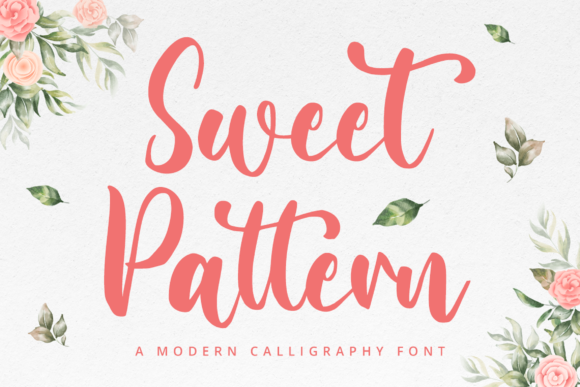
Sweet Pattern is a unique and elegant handwritten font designed for creators who value authenticity, warmth, and visual cohesion. It’s not just another script typeface—it’s crafted with subtle rhythm, natural stroke variation, and balanced spacing that mimics the intentionality of hand-lettered work. Unlike overly ornate or rigid scripts, Sweet Pattern maintains readability at small sizes while holding presence at large scales. This balance makes it especially effective in workflows where tone, trust, and personal connection matter—whether you’re designing for a client, launching a brand, or preparing a meaningful personal project.
Where Sweet Pattern Fits in Your Creative Process
Fonts aren’t selected in isolation—they’re chosen as part of a larger sequence: research, mood boarding, asset gathering, layout, feedback, refinement, and delivery. Sweet Pattern typically enters the workflow after core messaging and audience intent are clarified but before final layout lock-in. It’s rarely the first decision—but often one of the most consequential for emotional resonance.
For example, a wedding planner drafting invitation suites will already know the couple’s story, color palette, and paper stock before selecting Sweet Pattern. Its use signals intention: this isn’t generic stationery—it’s a curated extension of their relationship. Similarly, an educator creating printable gratitude cards for students doesn’t reach for Sweet Pattern to “make it pretty.” They choose it because its soft, unhurried strokes reinforce calm, sincerity, and care—qualities aligned with the learning environment they’re cultivating.
Practical Use Cases—and When to Deploy Them
Sweet Pattern excels in contexts where human voice matters more than corporate polish. Here’s how it integrates across real-world applications:
- Wedding invitations and day-of signage: Used for names, dates, and short phrases—not body copy. Paired with a clean sans-serif (like Inter or Lato) for supporting text, it creates hierarchy without competing for attention.
- Thank-you cards and personal notes: Ideal when printed on textured paper or used digitally with subtle shadow or texture overlays. Avoid stretching or distorting the glyphs—Sweet Pattern relies on original proportions for its organic feel.
- Greeting card designs: Works best for limited-run or boutique collections where differentiation matters. Its uniqueness helps avoid visual fatigue common with overused scripts like Pacifico or Great Vibes.
- Logos and wordmarks: Suitable for service-based businesses centered on empathy—therapists, midwives, florists, or independent educators. Not recommended for tech startups or financial services unless paired with strong contextual framing.
- Digital assets (email headers, social banners): Renders well on modern browsers and most email clients at 24–36px sizes. For broader compatibility, embed via @font-face or use web-safe fallbacks in CSS declarations.
Integration With Other Tools and Assets
Sweet Pattern doesn’t live in a vacuum. Its effectiveness depends on thoughtful pairing and technical preparation. In Adobe Creative Cloud, load it into Fonts.com or Adobe Fonts for sync across apps—ensuring consistency between Illustrator mockups, InDesign layouts, and Photoshop composites. In Figma, install the desktop font first, then activate it in the local fonts menu; avoid relying solely on cloud-hosted versions if team members have varying access levels.
When exporting for print, convert Sweet Pattern text to outlines only after final proofing—this preserves editability during revisions. For web use, generate lightweight WOFF2 files using tools like Transfonter, and declare them with appropriate font-display strategies (font-display: swap;) to prevent invisible text during load.
It pairs naturally with tactile design elements: watercolor textures, linen backgrounds, muted palettes (dusty rose, oat, charcoal), and minimal iconography. Avoid pairing it with high-contrast neon colors or geometric sans-serifs with extreme x-heights—those combinations undermine its quiet confidence.
Preparation and Consistency Across Projects
Before deploying Sweet Pattern across multiple assets, define usage rules. Create a mini style guide—even if informal—that specifies:
- Which characters are approved for headlines vs. subheads (e.g., uppercase only for names, sentence case for quotes)
- Minimum readable size (14px for digital body, 18pt for printed small text)
- Line height recommendations (1.4–1.6 for paragraphs, 1.2 for tight headline spacing)
- Color contrast ratios (aim for at least 4.5:1 against background for accessibility compliance)
This prevents inconsistency across deliverables—especially important for freelancers managing several clients or small business owners updating seasonal campaigns. One designer reported cutting revision rounds by nearly 40% after standardizing Sweet Pattern usage across her branding packages, simply by documenting baseline spacing and weight pairings upfront.
Efficiency Without Sacrificing Quality
Sweet Pattern streamlines execution when used deliberately—not everywhere, but where it adds measurable value. That means skipping it for data-heavy reports or legal disclaimers, and reserving it for moments where tone directly impacts perception: a founder’s welcome note, a teacher’s end-of-year letter, a nonprofit’s donor appreciation banner.
Because it’s a single-weight, single-style font (no bold or italic variants), plan alternatives early. If emphasis is needed, use color shifts, underline, or increased letter-spacing rather than faux-bold rendering—which degrades quality and violates typographic best practices.
Also consider licensing. Sweet Pattern is available under standard desktop, web, and app licenses—but verify coverage before scaling usage. A freelance marketer building five client websites needs a multi-site web license, not a single-domain one. Overlooking this leads to compliance risk and unexpected renewal costs down the line.
Long-Term Usability and Evolution
A font’s longevity isn’t about trend endurance—it’s about adaptability across your growing needs. Sweet Pattern holds up because it avoids gimmicks: no excessive swashes, no forced ligatures, no exaggerated terminals. That restraint gives it room to evolve with your work.
One small business owner began using Sweet Pattern for handmade soap labels in 2021. As her brand expanded into workshops and digital courses, she retained the font for instructor bios and certificate headers—keeping visual continuity without feeling repetitive. She adjusted color application (from sage green to deep indigo) and added minimalist line art, but kept the core typography intact. The result? Customers recognized her voice instantly, even as her offerings diversified.
That kind of flexibility comes from respecting the font’s purpose—not forcing it into roles it wasn’t built for. It won’t replace your system font for spreadsheets. It won’t power your SaaS dashboard UI. But in the spaces where people pause, reflect, and connect? Sweet Pattern earns its place—not as decoration, but as deliberate, human-centered design infrastructure.
Getting Started Thoughtfully
If you’re evaluating Sweet Pattern for an upcoming project, begin with a narrow test: apply it to one high-impact element (e.g., a headline on a landing page, the name block on an invitation) and compare side-by-side with your current default. Ask yourself: does this improve clarity, warmth, or memorability—or does it introduce friction?
Then, check technical fit: does your CMS support custom font uploads? Does your printer require outlined text? Do your collaborators have access to the same version? Address those before scaling.
Finally, remember that typography supports intent—it doesn’t substitute for it. Sweet Pattern enhances sincerity, but it can’t manufacture it. Pair it with honest writing, intentional imagery, and respectful spacing. When all three align, the result isn’t just visually cohesive—it feels meaningfully made.